 Mini Shell
| Direktori : /scripts/ |
| Current File : //scripts/securetmp |
#!/usr/local/cpanel/3rdparty/bin/perl

#                                      Copyright 2025 WebPros International, LLC
#                                                           All rights reserved.
# copyright@cpanel.net                                         http://cpanel.net
# This code is subject to the cPanel license. Unauthorized copying is prohibited.

use strict;
use warnings;

use Cpanel::TempFile           ();
use Cpanel::SafeFile           ();
use Cpanel::Filesys::FindParse ();
use Cpanel::DiskLib            ();
use Getopt::Long;
use Cpanel::Logger             ();
use Cpanel::SafeRun::Errors    ();
use Cpanel::SafeRun::Simple    ();
use Cpanel::Filesys::Mounts    ();
use Cpanel::Config::LoadCpConf ();

my $logger = Cpanel::Logger->new();

$| = 1;    ## no critic qw(RequireLocalizedPunctuationVars)

my $has_loop_device = 0;

my $install   = 0;    # Add securetmp to system startup
my $uninstall = 0;    # Remove from system startup
my $auto      = 0;    # Secure /tmp and /var/tmp
my $daemonize = 1;
my $help      = 0;

# Get command line options
GetOptions( 'auto' => \$auto, 'install' => \$install, 'uninstall' => \$uninstall, 'daemonize!' => \$daemonize, 'help' => \$help );

if ($help) {
    print <<"MANUAL";
$0 - secure /tmp and /var/tmp

Options:
- auto: skip interactive customization questions
- install: install & enable securetmp service
- uninstall: disable & uninstal securetmp service
- daemonize: run securetmp in background ( default true )

Sample usages:
# run in interactive mode
> $0

# disable interactive mode, run in background
> $0 --auto

# disable interactive mode, do not run in background
> $0 --auto --nodaemonize
MANUAL
    exit;
}

if ( -e '/var/cpanel/version/securetmp_disabled' ) {
    print "[securetmp] Disabled per /var/cpanel/version/securetmp_disabled\n";
    exit;
}
elsif ( -e '/var/cpanel/disabled/securetmp' ) {
    print "[securetmp] Disabled per /var/cpanel/disabled/securetmp\n";
    exit;
}
elsif ( -e '/var/cpanel/dev_sandbox' ) {
    print "[securetmp] Disabled on development sandboxes\n";
    exit;
}

# do check for loopback module for Linux based VPS
my @modules = Cpanel::SafeRun::Errors::saferunallerrors('lsmod');
$has_loop_device = check_loop_device();

if ( !grep /loop/, @modules ) {
    print "*** Notice *** No loop module detected\n";    # could be built into kernel, so don't bail out yet
    print "If the loopback block device is built as a module, try running `modprobe loop` as root via ssh and running this script again.\n";
    print "If the loopback block device is built into the kernel itself, you can ignore this message.\n";
}
if ( !$has_loop_device ) {
    print "*** Notice *** No working loopback device files found. Try running `modprobe loop` as root via ssh and running this script again.\n";
    exit(0);
}

# Start interactive setup
if ( !$auto && !$install && !$uninstall && -t STDIN ) {
    print 'Would you like to secure /tmp & /var/tmp at boot time? (y/n) ';
    my $answer;
    chomp( $answer = <STDIN> );
    if ( $answer =~ m/^y/i ) {
        $install = 1;
    }
    else {
        print "securetmp will not be added to system startup at this time.\n";
    }
    undef $answer;

    if ( !$install ) {
        print 'Would you like to disable securetmp from the system startup? (y/n) ';
        chomp( $answer = <STDIN> );
        if ( $answer =~ m/^y/i ) {
            $uninstall = 1;
        }
        else {
            print "securetmp will not be removed from system startup.\n";
        }
        undef $answer;
    }

    print 'Would you like to secure /tmp & /var/tmp now? (y/n) ';
    chomp( $answer = <STDIN> );
    if ( $answer =~ m/^y/i ) {
        $auto = 1;
    }
    else {
        print "/tmp & /var/tmp will not be secured at this time.\n";
    }

    exit if ( !$install && !$auto && !$uninstall );
}
elsif ( !$auto && !$install && !$uninstall ) {
    exit 1;
}

## ADD/REMOVE from startup
#-----------------------------------------------------------------

if ( !-x '/usr/local/cpanel/scripts/cpservice' ) {
    $logger->warn("cpservice is not available. Please check its status.");
}
else {

    # Remove securetmp from system startup
    if ($uninstall) {
        Cpanel::SafeRun::Simple::saferun( '/usr/local/cpanel/scripts/cpservice', 'securetmp', 'stop' );
        Cpanel::SafeRun::Simple::saferun( '/usr/local/cpanel/scripts/cpservice', 'securetmp', 'disable', '2345' );
        Cpanel::SafeRun::Simple::saferun( '/usr/local/cpanel/scripts/cpservice', 'securetmp', 'uninstall' );
    }

    # Add securetmp to system startup
    if ($install) {
        Cpanel::SafeRun::Simple::saferun( '/usr/local/cpanel/scripts/cpservice', 'securetmp', 'install' );
        Cpanel::SafeRun::Simple::saferun( '/usr/local/cpanel/scripts/cpservice', 'securetmp', 'enable', '35' );

        # Do not start securetmp here or it will be run again
    }

}

#-----------------------------------------------------------------

# Fork and secure if not called from console
if ( $auto && !-t STDIN && $daemonize ) {
    $SIG{'CHLD'} = \&reaper;
    print "Setting up /tmp & /var/tmp in the background\n";
    exit if fork;
}
elsif ( !$auto ) {
    exit;
}

print "Securing /tmp & /var/tmp\n";

# Secure PATH
$ENV{'PATH'} .= ":/sbin:/usr/sbin";

my $cpconf          = Cpanel::Config::LoadCpConf::loadcpconf();
my $use_custom_size = defined $cpconf->{'securetmp_file_size'};

# Global Variables
my $brokenvartmp = 0;
my @vnodes       = ();
my $vnodeconfig  = '';
my $vnodesrch    = '';
my $vnodenumber  = 0;
my $tmpmnt       = '';
my $vartmpmnt    = '';
my $tmpopts      = '';
my $vartmpopts   = '';
my $mountkeyword = '';
my $cpflags      = '';
my $min_size     = 512 * 1024;                                                               # 512MB
my $tmpdsksize   = $use_custom_size ? $cpconf->{'securetmp_file_size'} * 1024 : $min_size;

$mountkeyword = 'remount';
$cpflags      = '-af';

if ( open my $mounts_fh, '<', '/proc/mounts' ) {
    while ( my $line = readline $mounts_fh ) {

        # must detect: /dev/sda1 /var/tmp\040(deleted) ext2 rw,nosuid,noexec,usrquota 0 0
        if ( $line =~ m/^(\S+)\s+([^\s\\\(]+)\S*\s+\S+\s+(\S+)/ ) {
            if ( $2 eq '/tmp' ) {
                $tmpmnt  = $1;
                $tmpopts = $3;
            }
            elsif ( $2 eq '/var/tmp' ) {
                $vartmpmnt  = $1;
                $vartmpopts = $3;
            }
            if ( $1 =~ /^\/dev\/vn.*/ ) {
                push @vnodes, $1;
            }
        }

        if ( $line =~ m/\S+\s+\(deleted\)[^\/]*\/var\/tmp\s+/ ) {
            $brokenvartmp = 1;
            $vartmpmnt    = '';
            $vartmpopts   = '';
        }
    }
    close $mounts_fh;
}
else {
    die "Unable to read /proc/mounts: $!";
}

# Begin securetmp actions

print "Calculating size on /tmp\n";
my $partition_map = {};
my $filesys       = Cpanel::DiskLib::get_disk_used_percentage_with_dupedevs();
foreach my $disk ( @{$filesys} ) {
    $partition_map->{ $disk->{'mount'} } = $disk->{'available'};
}
my $mount_point = Cpanel::Filesys::FindParse::find_mount( $filesys, '/usr/tmpDSK' );

my $available = $partition_map->{$mount_point};

if ($use_custom_size) {
    if ( $tmpdsksize < $min_size ) {
        $tmpdsksize = $min_size;
    }
    my $max_allowed = int( $available * 0.9 );
    if ( $tmpdsksize > $max_allowed ) {
        $tmpdsksize = $max_allowed;
    }
}
else {
    my $five_percent_of_available = ( $available * 0.05 );
    if ( $five_percent_of_available > $tmpdsksize ) {
        $tmpdsksize = $five_percent_of_available;
    }
    my $FOUR_GIG_k = ( 1024 * 1024 * 4 );
    if ( $tmpdsksize > $FOUR_GIG_k ) {
        $tmpdsksize = $FOUR_GIG_k;
    }
}

$tmpdsksize = int($tmpdsksize);
$tmpdsksize = $tmpdsksize - ( $tmpdsksize % 1024 );

my $tmpdsksize_megs = ( $tmpdsksize / 1024 );
print "/tmp calculated to be $tmpdsksize_megs M based on available disk space in /usr\n";

# Check loop dev on Linux
if ( !$has_loop_device ) {
    print "The system does not support loop devices.\n";
    if ($brokenvartmp) {
        print 'Unmounting orphaned /var/tmp ...';
        system 'umount', '/var/tmp';
        print "Done\n";
    }
    exit;
}

if ( -d '/usr/tmpDSK' ) {
    rename( '/usr/tmpDSK', '/usr/tmpDSK.move_away.' . $$ . '.' . time() );
}

if ( !-e '/usr/tmpDSK' ) {
    print "No separate partition for tmp!\n";
    createtmpdisk('/usr/tmpDSK');
}
elsif ( -d '/usr/tmpDSK' ) {
    die "/usr/tmpDSK exists as a directory. Please remove and rerun /usr/local/cpanel/scripts/securetmp.\n";
}

# ensure that /usr/tmpDSK is large enough
# or is the proper size if the tweak setting has been set
elsif ( ( -s '/usr/tmpDSK' ) < ( $tmpdsksize * 1024 ) || ( $use_custom_size && ( -s '/usr/tmpDSK' ) != ( $tmpdsksize * 1024 ) ) ) {
    print "Your /tmp is the wrong size.   Rebuilding it now.\n";
    if ($tmpmnt) {
        print "Unmounting /tmp ... ";
        system 'umount', '/tmp';
        $tmpmnt = '';
    }
    if ($vartmpmnt) {
        print "Unmounting /var/tmp ... ";
        system 'umount', '/var/tmp';
        $vartmpmnt    = '';
        $brokenvartmp = 0;
    }
    system 'rm', '-f', '/usr/tmpDSK';
    createtmpdisk('/usr/tmpDSK');
}
else {
    print "Everything looks good with your /tmp.  Its the right size and ready to go.\n";
}

if ( !$tmpmnt ) {

    print 'Setting up /tmp... ';
    if ( -e '/usr/tmp.secure' ) {
        system 'mv', '-f', '/usr/tmp.secure', '/usr/tmp.secure.cpback';
    }
    mkdir '/usr/tmp.secure';
    archivecopy( '/tmp', '/usr/tmp.secure' );
    system 'rm', '-rf', '/tmp';
    mkdir '/tmp';
    chmod( oct(1777), '/tmp' );
    my $mountresult = mounttmpdsk( '/usr/tmpDSK', '/tmp', $tmpopts );
    archivecopy( '/usr/tmp.secure/tmp/.', '/tmp' );
    chmod( oct(1777), '/tmp' );
    system 'rm', '-rf', '/usr/tmp.secure';

    if ($mountresult) {
        die "There was a problem mounting /tmp: $mountresult";
    }
    print "Done\n";
}
elsif ( $tmpmnt && $tmpopts !~ m/noexec/ ) {
    print 'Securing /tmp... ';
    system 'mount', '-o', $mountkeyword . ',noexec,nosuid', $tmpmnt, '/tmp';
    print "Done\n";
}
else {
    print "/tmp is already secure\n";
}

if ( $brokenvartmp || ( $vartmpmnt && $vartmpopts !~ m/noexec/ ) ) {
    print 'Unmounting insecure /var/tmp... ';
    system 'umount', '/var/tmp';
    $vartmpmnt  = '';
    $vartmpopts = '';
    print "Done\n";
}

if ( !$vartmpmnt ) {
    print 'Setting up /var/tmp... ';

    if ( !-e '/var/tmp' ) {
        mkdir '/var/tmp';
    }
    elsif ( !-d '/var/tmp' ) {
        system 'mv', '/var/tmp', '/var/tmp.cpback';
        mkdir '/var/tmp';
    }

    system 'mount', '-o', 'bind,noexec,nosuid', '/tmp', '/var/tmp';
    print "Done\n";
}
else {
    print "/var/tmp is already secure\n";
}

my $usingTMPDSK = 0;
if ( -e '/usr/tmpDSK' ) {
    my $mount = `mount`;
    if ( $mount =~ m/tmpDSK/ ) {
        $usingTMPDSK = 1;
    }
}

print 'Checking fstab for entries ...';
my $hastmpdsk    = 0;
my $hasvartmpdsk = 0;
my $fslock       = Cpanel::SafeFile::safeopen( \*FSTAB, '+<', '/etc/fstab' );
if ($fslock) {
    while (<FSTAB>) {
        if (/^\s*\/usr\/tmpDSK/)      { $hastmpdsk    = 1; }
        if (/^\s*(\S+)\s*\/var\/tmp/) { $hasvartmpdsk = 1; }
    }

    if ( !$hastmpdsk && $usingTMPDSK ) {
        print "Added fstab entry (/tmp)....";
        print FSTAB "/usr/tmpDSK             /tmp                    ext4    defaults,noauto        0 0\n";
    }
    if ( !$hasvartmpdsk && $vartmpmnt ) {
        print "Added fstab entry (/var/tmp)....";
        print FSTAB "/tmp             /var/tmp                    ext4    defaults,bind,noauto        0 0\n";
    }

    Cpanel::SafeFile::safeclose( \*FSTAB, $fslock );
    print "Done\n";
}
else {
    $logger->die("Could not edit /etc/fstab");
}

my $logrotate = '/etc/cron.daily/logrotate';
if ( -e $logrotate ) {
    my @logrotate_contents;
    my $has_tmpdir = 0;
    if ( open my $logrotate_fh, '<', $logrotate ) {
        while ( my $line = readline $logrotate_fh ) {
            if ( $line =~ m/TMPDIR/ && $line !~ m/^\s*#/ ) {
                $has_tmpdir = 1;
                last;
            }
            push @logrotate_contents, $line;
        }
        close $logrotate_fh;

        if ( !$has_tmpdir ) {
            my $updated_logrotate = 0;
            if ( open my $logrotate_fh, '>', $logrotate ) {
                foreach my $line (@logrotate_contents) {
                    if ( $line =~ m/^#!\/(?:usr|bin)/ ) {
                        print "Adding TMPDIR setting to /etc/cron.daily/logrotate\n";
                        print {$logrotate_fh} $line;
                        print {$logrotate_fh} "export TMPDIR=/var/spool/logrotate/tmp\n";
                        $updated_logrotate = 1;
                    }
                    else {
                        print {$logrotate_fh} $line;
                    }
                }
                close $logrotate_fh;
            }
            if ($updated_logrotate) {
                if ( !-e '/var/spool/logrotate/tmp' ) {
                    system 'mkdir', '-p', '/var/spool/logrotate/tmp';
                }
                if ( !-d '/var/spool/logrotate/tmp' ) {
                    print <<'EOM';
!!!!!!!!!!!!!!!!!!!!!!!!!!!!!!!!!!!!!!!!!!!!!!!!!!!!!!!!!!!!!!!!!!!!!!!!!!
Logrotate detected and TMPDIR setting updated. The TMPDIR
directory (/var/spool/logrotate/tmp) does not exist!

Logrotate will need to use this directory for execution of
its postrotate scripts. This directory is normally /tmp, but
due to /tmp being set as non-executable an alternative
directory must be specified. Please correct this issue.

See /etc/cron.daily/logrotate to adjust the TMPDIR value for your system.
!!!!!!!!!!!!!!!!!!!!!!!!!!!!!!!!!!!!!!!!!!!!!!!!!!!!!!!!!!!!!!!!!!!!!!!!!!
EOM
                }
            }
            else {
                warn "Failed to update /etc/cron.daily/logrotate! Logrotate may be corrupt.";
            }
        }
        else {
            print "Logrotate TMPDIR already configured\n";
        }
    }
}

print "Process Complete\n";

Cpanel::Filesys::Mounts::clear_mounts_cache();

exit;

################################################################################
# createtmpdisk
################################################################################
sub createtmpdisk {
    my $path      = shift;
    my $disk_size = shift || $tmpdsksize;

    local $ENV{'LC_ALL'} = 'C';    # Force prompt processing to english

    print "Building ${path}...";
    if ( -e $path ) {
        unlink($path);
    }
    my $disk_size_in_m = int( $disk_size / 1024 ) || 1;
    my $bytes          = 1024 * 1024 * $disk_size_in_m;
    open( my $fh, '>', $path ) or die "Failed to open “$path”: $!";
    truncate( $fh, $bytes ) or do {
        die "truncate($path, $bytes): $!";
    };
    close($fh);

    open( my $mkfs, "|-" ) || exec( "/sbin/mkfs", $path );
    print {$mkfs} "yes\r\n";
    close($mkfs);
    if ( -e "/sbin/tune2fs" ) {
        system( "/sbin/tune2fs", "-j", $path );
    }

    chmod 0600, $path;
    print "Done\n";
    return;
}

################################################################################
# archivecopy
################################################################################
sub archivecopy {
    my ( $origin, $dest ) = @_;

    my $cpflags = '-af';
    return system( "cp", $cpflags, $origin, $dest );
}

################################################################################
# mounttmpdsk
################################################################################
sub mounttmpdsk {
    my ( $disk_path, $mount_path, $current_mount_opts ) = @_;

    $current_mount_opts //= '';

    # Try to mount ext4 + discard first; if that fails, let the system detect the filesystem.
    if ( $current_mount_opts !~ m/loop/ ) {
        if ( system( 'mount', '-t', 'ext4', '-o', 'loop,noexec,nosuid,rw,discard', $disk_path, $mount_path ) ) {
            system( 'mount', '-o', 'loop,noexec,nosuid,rw', $disk_path, $mount_path );
        }
    }
    return (0);
}

sub test_loopback_device {
    my $loopback_device = shift;

    system( 'umount', '/usr/testDSK' );

    createtmpdisk( '/usr/testDSK', 10240 );

    my $tmpfile         = Cpanel::TempFile->new();
    my $test_mount_path = $tmpfile->dir();

    mounttmpdsk( '/usr/testDSK', $test_mount_path );

    my $loopback_status = Cpanel::SafeRun::Errors::saferunallerrors( 'losetup', $loopback_device );

    system( 'umount', $test_mount_path );
    unlink( '/usr/testDSK', $test_mount_path );

    return $loopback_status =~ m/\Q$loopback_device\E:.*\/usr\/testDSK/i ? 1 : 0;
}

sub check_loop_device {
    my $loopback_device = Cpanel::SafeRun::Errors::saferunallerrors( 'losetup', '-f' );

    chomp $loopback_device;

    return if !$loopback_device || !test_loopback_device($loopback_device);

    return $loopback_device;
}

################################################################################
# reaper
################################################################################
sub reaper {
    my $thedead;
    while ( ( $thedead = waitpid( -1, 1 ) ) > 0 ) {

        # the dead shall do what ?
    }
    $SIG{CHLD} = \&reaper;
}


ParrotFish Japanese Fusion es el lugar donde México le dio un nuevo sabor al sushi, y seguro se convertirá en tu favorito si buscas una cocina audaz y a la vanguardia. Sumérgete en sabores frescos y deliciosos dentro de un espacio moderno, rodeado por los paisajes tropicales de Punta de Mita.
Aquí cada rollo, nigiri y sashimi cuenta una historia y te transporte a la Tierra del Sol Naciente.

ParrotFish fue el primer restaurante de sushi en Punta de Mita y sigue siendo uno de los favoritos tanto de la comunidad local como de viajeros de todo el mundo. Nos encontrarás dentro de Armony Marival Resort & Spa Punta de Mita.
Carretera a Punta de Mita km 8.3, Playa Destiladeras, Bahía de Banderas, Nayarit C.P. 63734, México
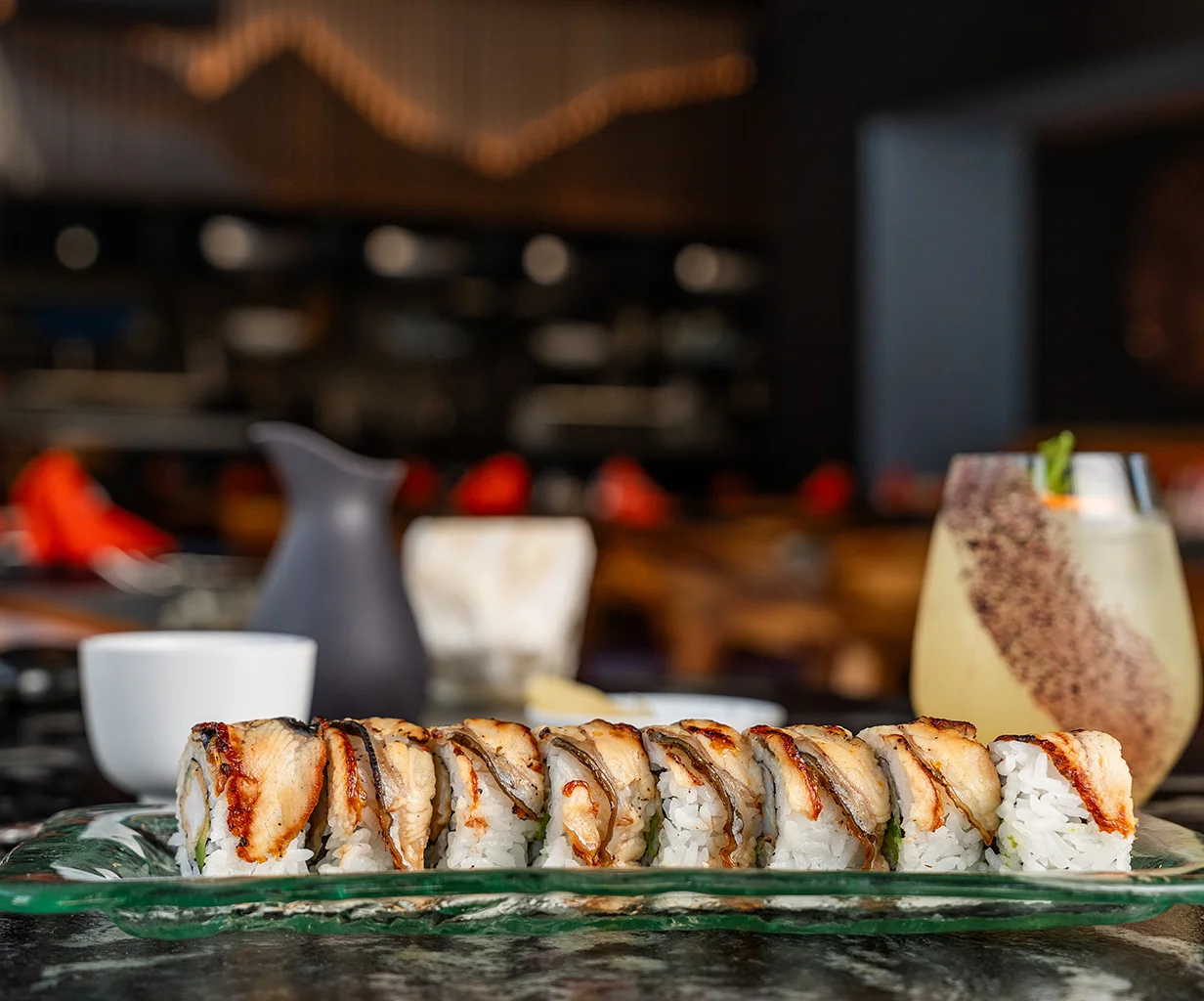
La decoración, inspirada en la belleza natural del Pacífico, junto con platillos llenos de color que evocan el Japón ancestral, dan vida a un espacio donde las culturas japonesa y mexicana no solo se encuentran, sino que entrelazan sus manos en un baile de sabores, memorias y tradición.
Explora nuestra galería y enamórate de la esencia única de ParrotFish Japanese Fusion.
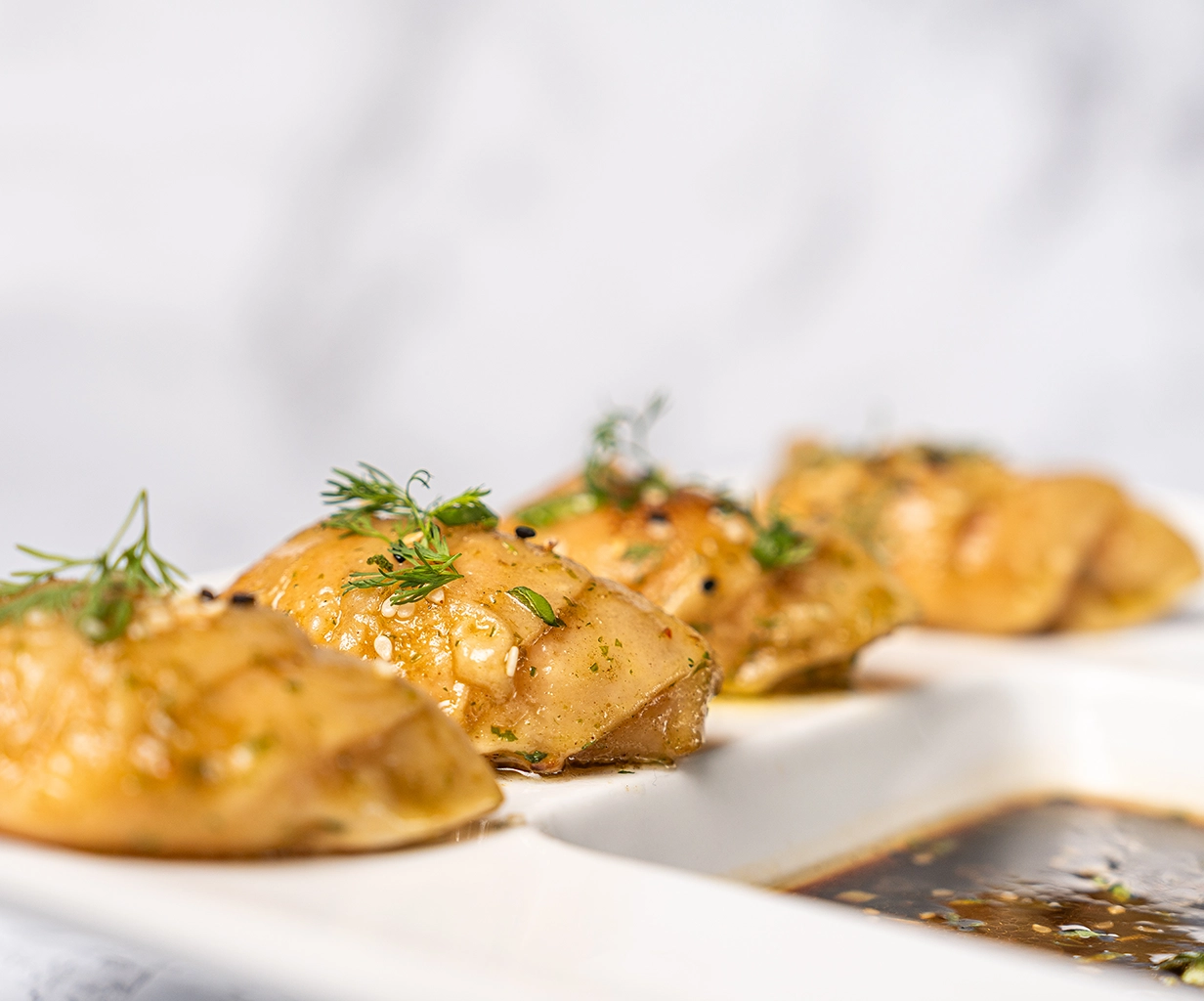
Explora nuestro menú



En ParrotFish, quien guía el filo es el Chef Ejecutivo Benito Hernandez, quien fusiona elegancia y creatividad, evocando el espíritu de tierras lejanas. En la barra, Donat prepara cocteles que se convierten en un ritual de sabor. Juntos, crean una experiencia que rinde homenaje al arte de la cultura japonesa: refinada e inolvidable.
Descubre más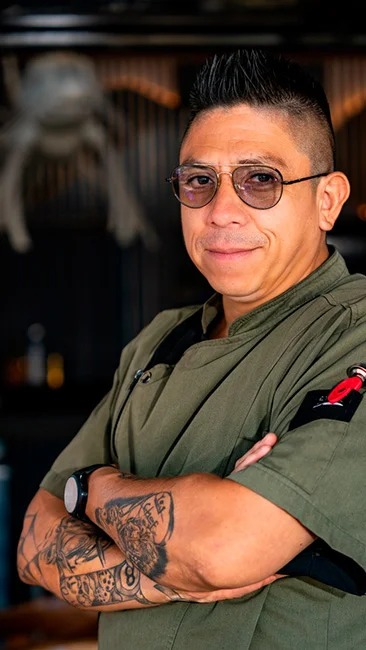

Nueva ubicación dentro de Armony Marival Resort & Spa Punta de Mita

 BLOG
 ENGLISH