 Mini Shell
| Direktori : /scripts/ |
| Current File : //scripts/check_immutable_files |
#!/usr/local/cpanel/3rdparty/bin/perl

# cpanel - scripts/check_immutable_files           Copyright 2022 cPanel, L.L.C.
#                                                           All rights reserved.
# copyright@cpanel.net                                         http://cpanel.net
# This code is subject to the cPanel license. Unauthorized copying is prohibited

#
# This is the authorative code used to sync /usr/local/cpanel
# Accept no imitators.
#

use strict;
use warnings;

use Cpanel::Usage           ();
use Cpanel::SafeRun::Errors ();

my $frequency = 10;
my $force     = 0;
my $is_help   = 0;

Cpanel::Usage::wrap_options(
    \@ARGV,
    \&usage,
    {
        'frequency' => \$frequency,
        'force'     => \$force,
        'help'      => \$is_help,
    }
);

my $immutable_file_list = '/var/cpanel/immutable_files';
check_last_usage($immutable_file_list);    # Will exit if not necessary to proceed.

# Instead of just testing the exit code returned the script find-immutable-files
# execution, checking for a "{number} immutable files have been found" output line
# coming back from the script allows us to differentiate two distinct cases of
# non-zero exit code, namely: 1) The script ran and actual immutable files were
# found; 2) the script could not run at all for some reason. At some point we might
# decide that the second of those two is not a reason to hold up execution of the
# update script that calls this script.

my $script = '/usr/local/cpanel/bin/find-immutable-files';
my $n_found;

( my $myname = $0 ) =~ s{.*/}{};
my $consequences = "Script '$myname' will terminate now with non-zero exit code.";

die("\"$script\" is not executable. $consequences") if ( !-x $script );

my $output = Cpanel::SafeRun::Errors::saferunallerrors( 'nice', '-n', '20', $script, $frequency );
die("Unable to run script \"$script\". $consequences") if ( !defined $output );

if ( $output !~ /\b0 immutable files have been found\b/ ) {
    my $foundmatch = qr/\bfound\s+the\s+following\s+files\s+marked\s+as\s+immutable\s+/;

    $output =~ /$foundmatch/
      or die "Script $script could not be run or returned incomplete information. $consequences\n";

    if (
        $output =~ m{
                            ${foundmatch}in\s+the\s+[^\n]*location:\s*\n\n
                            (
                                (
                                    [^\n]+\n
                                )+
                            )
                            \n
                         }xms
    ) {
        $n_found = $1 =~ y/\n//;
    }

    defined $n_found
      or die "Script $script returned incomplete information. $consequences\n";

    die "$n_found immutable files were found on the system. $consequences\n";
}

print "OK: No immutable files were found on the system.\n";
exit 0;

sub check_last_usage {
    my $immutable_file_list = shift or die;

    return if ($force);                        # --force passed on command line.
    return if ( !-e $immutable_file_list );    # Check has never run.
    return if ( -s $immutable_file_list );     # Re-run if files were found on last run.

    # Run if the previous check was less than $frequency days ago
    my $immutable_last_run_days = -M $immutable_file_list;
    return if ( $immutable_last_run_days > $frequency );

    my $interval = round($immutable_last_run_days);
    if ( $interval >= round($frequency) ) {

        # message to user should not say "was last run approx. 10 days ago which is less than 10 days"
        $interval = round( $frequency - 1 );
    }

    if ( $interval <= 0 ) {

        # message to user should not say "was last run approx. 0 days ago"
        $interval = 'less than one day ago';
    }
    elsif ( $interval == 1 ) {
        $interval = 'approximately one day ago';
    }
    else {
        $interval = "approximately $interval days ago";
    }

    print "Not testing for immutable files, because the test was last run $interval (less than $frequency days)\n";
    exit 0;
}

sub round {

    # We could use Math::Round::round(), but tests show that loading that module
    # would consume some 900K memory. Hence the following homegrown solution instead.
    my $num = shift;
    return int( .5 + $num );
}

sub usage {
    print qq{Usage: $0 [options]};
    print qq{

    Options:
      --frequency=N     Do not perform check if we have already done so in past N days; default = 10
      --force           Force a check for immutable files, regardless of how recently it was last done
      --help            Brief help message

};
}

__END__

=head1 NAME

check_immutable_files - checks for immutable files in /usr/local/cpanel, if this has not already been done recently

=head1 USAGE

    # Normally called by maintenance with no flags.
    # file being used to log all other update-related proceses.
    /scripts/check_immutable_files

=head1 DESCRIPTION

When used standalone, you should probably use --verbose, otherwise
it won't appear to do anything.

Will not do anything if it has been invoked in the past 10 days (or
whatever number of days are indicated with the --frequency option),
unless called with --force. --frequency=0 is functionally
equivalent to --force, unless you do something unusual like
changing file mod times into the future.

If the check is run, the exit status will indicate whether immutable
files were found.

    --frequency=N   Do not perform check if we have already done so in past N days; default = 10.

    --force         Force a check for immutable files, regardless of how recently it was last done.

    --help          Print a brief help message


ParrotFish Japanese Fusion es el lugar donde México le dio un nuevo sabor al sushi, y seguro se convertirá en tu favorito si buscas una cocina audaz y a la vanguardia. Sumérgete en sabores frescos y deliciosos dentro de un espacio moderno, rodeado por los paisajes tropicales de Punta de Mita.
Aquí cada rollo, nigiri y sashimi cuenta una historia y te transporte a la Tierra del Sol Naciente.

ParrotFish fue el primer restaurante de sushi en Punta de Mita y sigue siendo uno de los favoritos tanto de la comunidad local como de viajeros de todo el mundo. Nos encontrarás dentro de Armony Marival Resort & Spa Punta de Mita.
Carretera a Punta de Mita km 8.3, Playa Destiladeras, Bahía de Banderas, Nayarit C.P. 63734, México
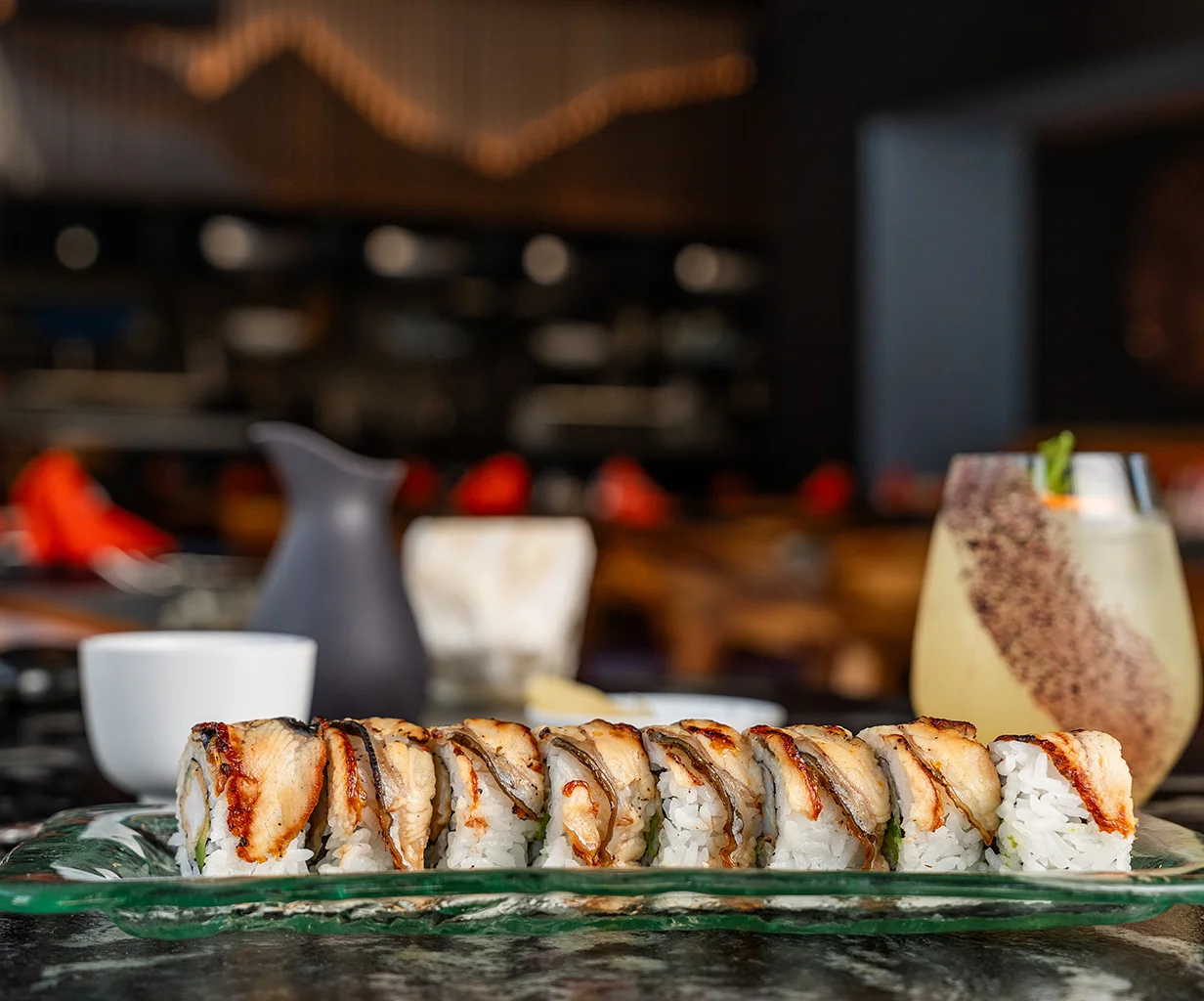
La decoración, inspirada en la belleza natural del Pacífico, junto con platillos llenos de color que evocan el Japón ancestral, dan vida a un espacio donde las culturas japonesa y mexicana no solo se encuentran, sino que entrelazan sus manos en un baile de sabores, memorias y tradición.
Explora nuestra galería y enamórate de la esencia única de ParrotFish Japanese Fusion.
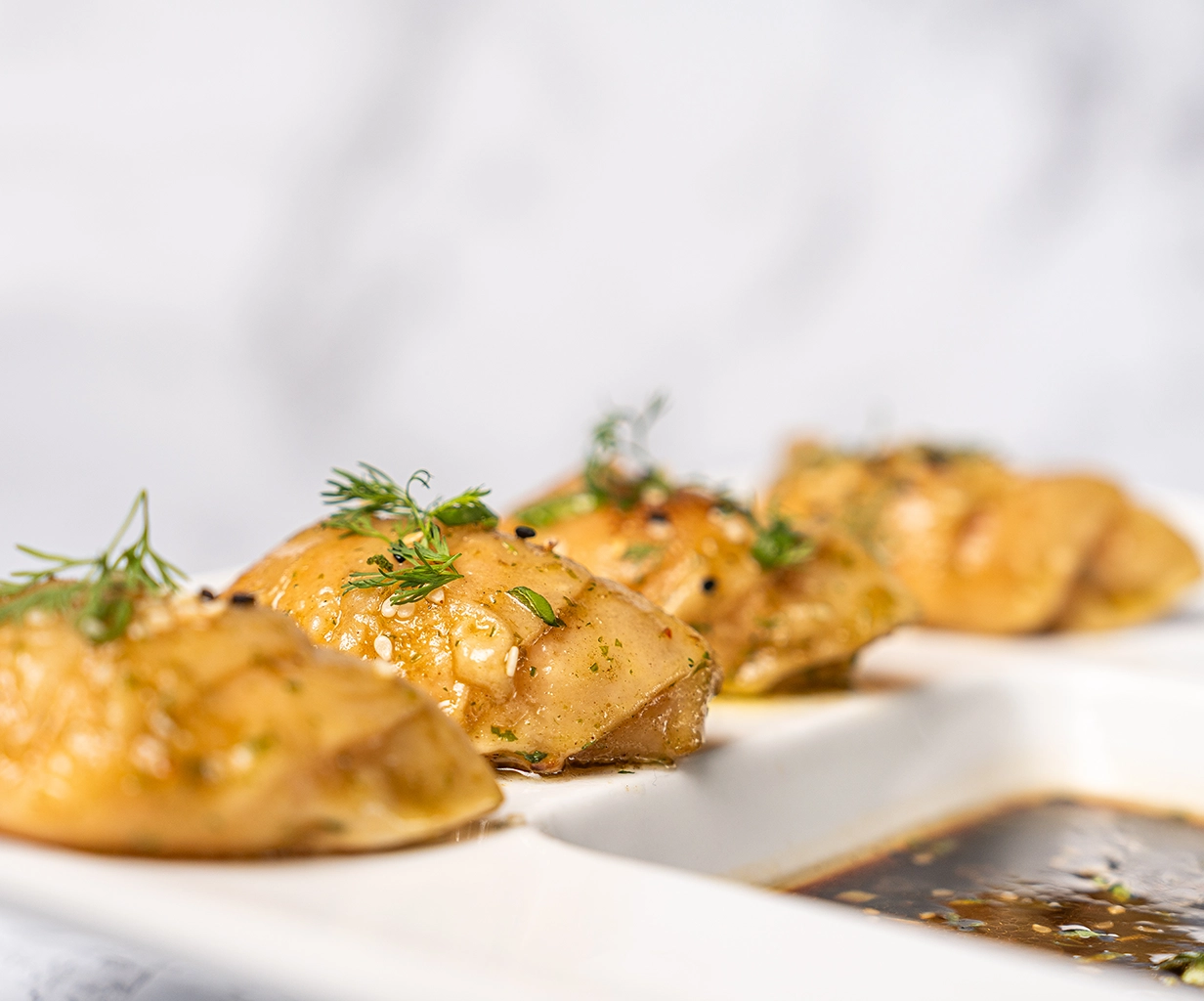
Explora nuestro menú



En ParrotFish, quien guía el filo es el Chef Ejecutivo Benito Hernandez, quien fusiona elegancia y creatividad, evocando el espíritu de tierras lejanas. En la barra, Donat prepara cocteles que se convierten en un ritual de sabor. Juntos, crean una experiencia que rinde homenaje al arte de la cultura japonesa: refinada e inolvidable.
Descubre más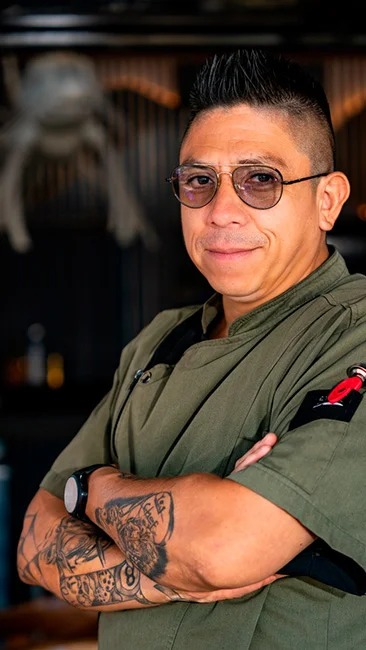

Nueva ubicación dentro de Armony Marival Resort & Spa Punta de Mita

 BLOG
 ENGLISH